
Radonova shares research and insights at the Indoor Environments 2026 Symposium in Norfolk
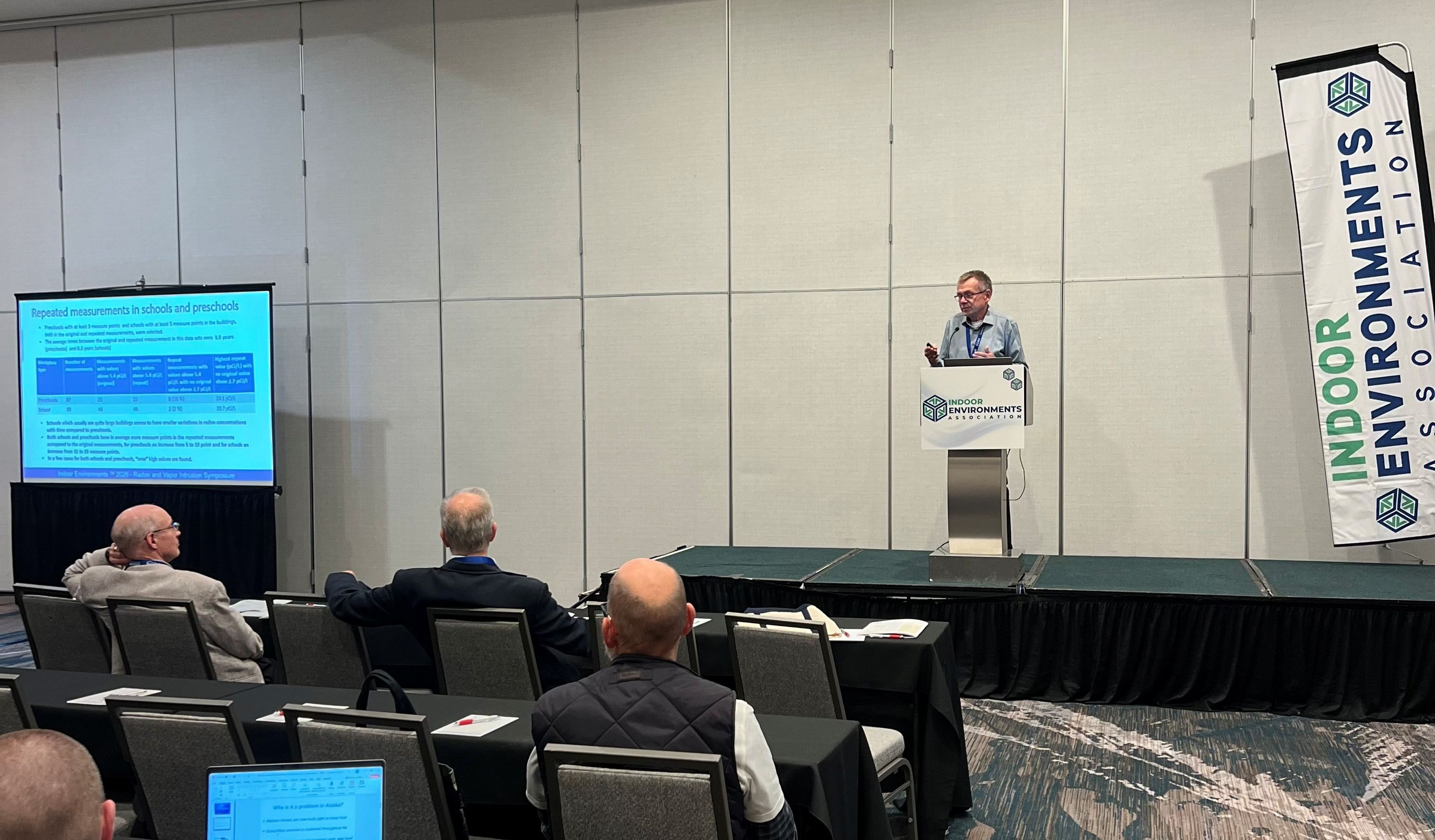
Expanding home radon testing and understanding the value of retesting were among the topics explored at the 40th annual Indoor Environments Radon and Vapor Intrusion Symposium, formerly the AARST International Radon and Vapor Intrusion Symposium. Held in Norfolk, Virginia, October 4–7, the event brought together the radon and vapor intrusion community. Radonova participated as an exhibitor and sponsor, with Senior Scientific Advisor Dr. Tryggve Rönnqvist presenting findings from Sweden on radon testing conducted again years after an initial measurement.
Organized by the Indoor Environments Association (IEA), the symposium brought together researchers, measurement and mitigation professionals, public health advocates, government representatives, and industry partners. Sessions covered research, field practices, standards and policy updates, as well as efforts to increase public awareness and access to radon testing.
For the Radonova team, the event provided time to reconnect with longtime colleagues and customers, meet new contacts, and discuss the practical challenges of reducing radon exposure.
Helping more households test for radon
Among the highlights for Radonova were sessions focused on expanding access to home testing and improving test kit use.
Alexis Gigliello of the American Lung Association presented program analysis and practices for improving at-home radon test kit use. Brian Hanson and fellow presenters discussed partnerships to expand access to home radon testing in Kansas.
These sessions offered useful perspectives for Radonova’s efforts to bring long-term radon testing to more homes across the United States, including how partnerships and support for households can help testing programs reach more people.
“The conversations in Norfolk gave us a lot to take home, from ideas for reaching more households to discussions about measurement practices,” said Benjamin Portin, Vice President, Radonova Laboratories, North America. “We appreciate everyone who stopped by our booth and shared their experiences. Those exchanges help us understand where better access to testing and practical support can make a difference.”
Swedish research highlights the value of repeat testing
In his presentation, Experiences from Repeated Measurements in Swedish Schools and Multi-Family Houses, Dr. Tryggve Rönnqvist examined repeat testing and differences between municipalities. His findings from schools and preschools showed both the strengths of municipal oversight and the importance of following up on earlier measurements.
The analysis indicated that municipal oversight of initial radon testing in Swedish schools and preschools generally works well, with extensive testing carried out in most municipalities.
However, low initial results did not always remain low. In some cases, repeat measurements approximately ten years later identified radon concentrations above Sweden’s reference level of 200 Bq/m³, even though every measurement location in the initial test had been below 100 Bq/m³.
The findings support the Swedish Radiation Safety Authority’s recommendation to repeat radon measurements every ten years. They also illustrate why an earlier low result should not be treated as permanent confirmation of low radon levels.
Follow-up varied between municipalities. The analysis identified repeat measurements in approximately half of the municipalities studied, suggesting substantial differences in how repeat testing is required or carried out.
For those responsible for schools and preschools, the findings underline the value of a testing program that includes both initial measurements and regular follow-up.
Thank you to everyone who joined us
Radonova thanks the organizers, speakers, fellow exhibitors, and everyone who visited our booth. The presentations and conversations gave us new ideas and valuable opportunities to learn from others working in radon testing and mitigation.
We were proud to support this year’s symposium and look forward to continuing the discussions with both new and longtime contacts.
Published
October 14, 2026
Category(s)
GeneralRelated News
Radonova expands its local presence in Canada

November 19, 2025